Things to Do in Santiago de Compostela: Post-Camino Activities
Things to do in Santiago de Compostela after the Camino—main sights, food spots, cultural experiences, and how to plan 2–3 days post-finish.

Anja
January 23, 2026
5 min read

Arriving in Santiago de Compostela is both ending and beginning. The cathedral marks your journey's end, but the city offers days of discovery beyond that emotional first glimpse. After weeks of walking, Santiago reveals itself as a living medieval city, Galician cultural capital, and UNESCO World Heritage site.
Most pilgrims stay 2-3 days minimum after collecting their Compostela. The city offers Romanesque architecture, vibrant food markets, peaceful parks, world-class Galician cuisine, and layered history. Use our Camino Weather Guide for easier planning on when you should time your Camino to end in Santiago based on seasonal conditions.
This guide covers the essential sites, cultural experiences, and dishes that make Santiago worth lingering.
History & Significance
The legend begins in the 9th century when hermit Pelayo discovered an ancient tomb after following a star. Bishop Theodomir declared the remains those of St. James the Apostle (Santiago), who tradition says preached in Iberia before his 44 AD martyrdom. King Alfonso II made the first documented royal pilgrimage in 829 AD.
The discovery transformed remote Spain into Europe's third holiest pilgrimage destination after Jerusalem and Rome. Cathedral construction began in 1075. The Codex Calixtinus (1140s) became the world's first travel guide, establishing infrastructure still shaping modern Camino walking.
Medieval Santiago prospered on pilgrimage economy, developing universities, hospitals, and sophisticated urban fabric. The tradition declined during the Reformation and Franco era but experienced dramatic 1980s revival. UNESCO designated the Old Town and routes as World Heritage Sites in 1985. Today over 400,000 annual pilgrims walk to Santiago.
Santiago functions as the finish because it houses St. James's relics in the cathedral crypt, maintains unbroken tradition since the 9th century, and has issued official Compostela certificates since medieval times.
Must-See Sites
After the emotional cathedral arrival and Compostela collection, Santiago reveals itself worth exploration. These seven sites represent the essential Santiago experience:

Cathedral of Santiago de Compostela
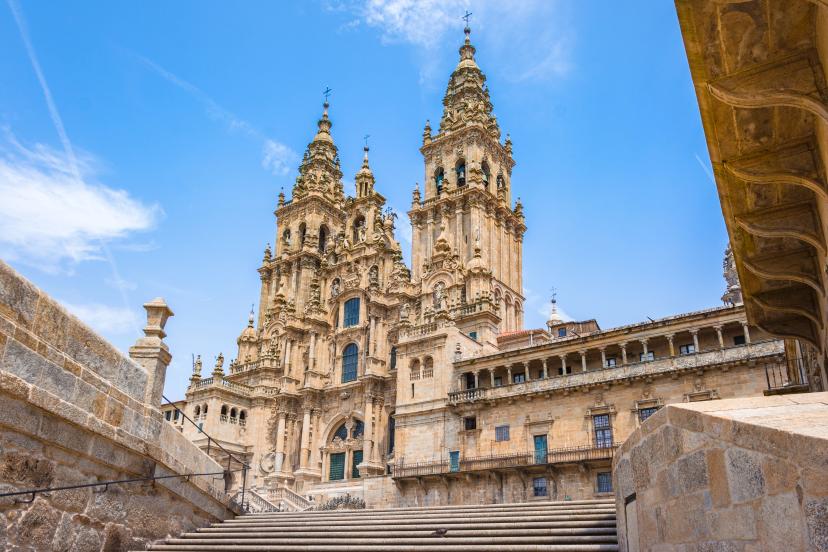
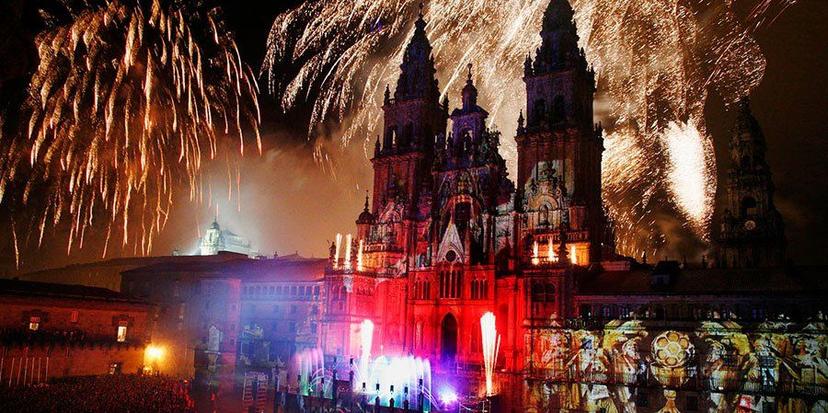
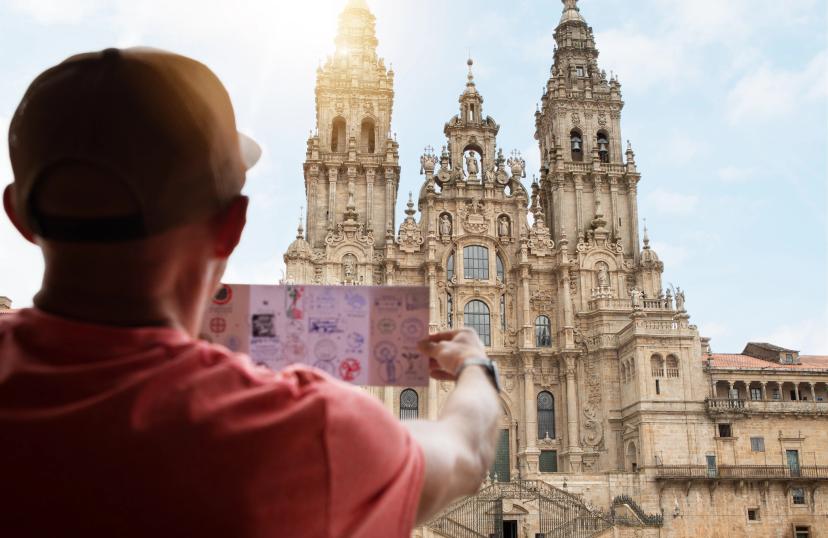
The Cathedral of Santiago deserves extended visits beyond the initial arrival moment, with the Romanesque Pórtico de la Gloria featuring medieval masterpiece carvings and the baroque facade dominating Plaza del Obradoiro. Daily Pilgrim Mass at noon often includes the record-holding Botafumeiro incense burner swinging through the transept on ceremonial occasions. The crypt houses St. James's silver reliquary, and pilgrims traditionally queue to embrace the statue behind the altar. The Holy Door opens only during Holy Years, creating powerful symbolic completion for pilgrims arriving during these special periods.

Plaza del Obradoiro
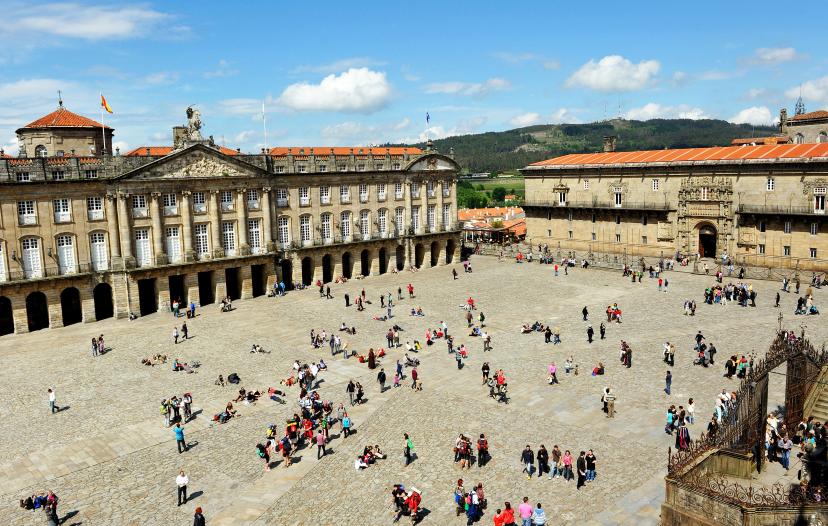
Plaza del Obradoiro fronts the cathedral's western facade, forming Santiago's emotional center where four monumental buildings frame the granite-paved square. This space serves as the hub of pilgrim celebration, with backpacks covering the granite, emotional arrivals, buskers playing Galician music, and exhausted pilgrims collapsed in triumph after weeks of walking. The square appears most dramatic in early morning before crowds arrive or at evening as the sun sets behind the western buildings.

Old Town (Zona Vella)
The UNESCO World Heritage medieval core rewards wandering without fixed destination, with Rúa do Franco concentrating restaurants, Praza de Cervantes hosting markets, and Praza da Quintana beside the cathedral offering dramatic architecture and street performers. University buildings, Romanesque churches, and baroque facades layer centuries of construction into a compact, walkable center. Rain-slicked granite and stone arcades create atmospheric passages throughout the quarter. Getting deliberately lost reveals Santiago's character better than planned routes, as every corner produces architectural discoveries.

Mercado de Abastos
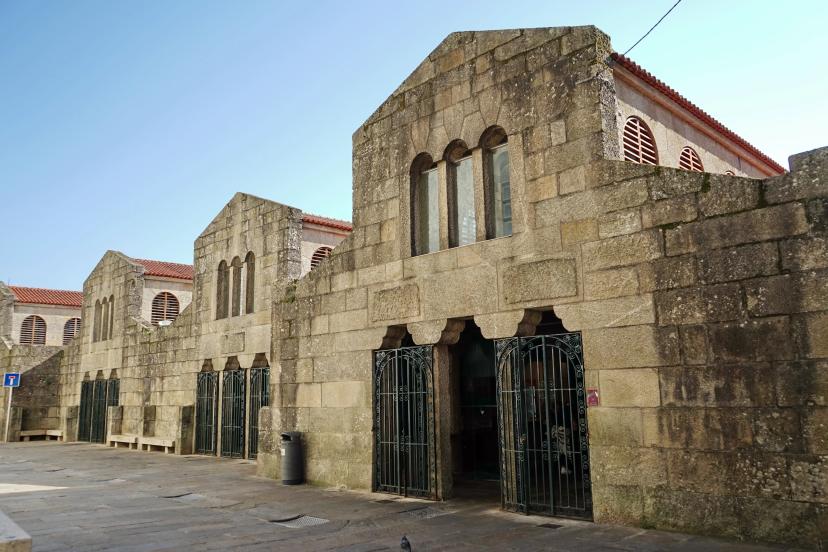
The Mercado de Abastos has operated as Santiago's main market since the 1870s, with the current granite building dating to 1941, showcasing extraordinary Galician seafood, vegetables, cheeses, and local products. Morning visits are essential as vendors close by 3pm weekdays and 2pm Saturday, with gleaming displays of Atlantic fish, octopus, percebes (goose barnacles), and scallops demonstrating why Galician seafood commands premium prices throughout Spain. Some vendors sell prepared foods and wine, ideal for authentic lunch standing at counters alongside locals.

Parque da Alameda
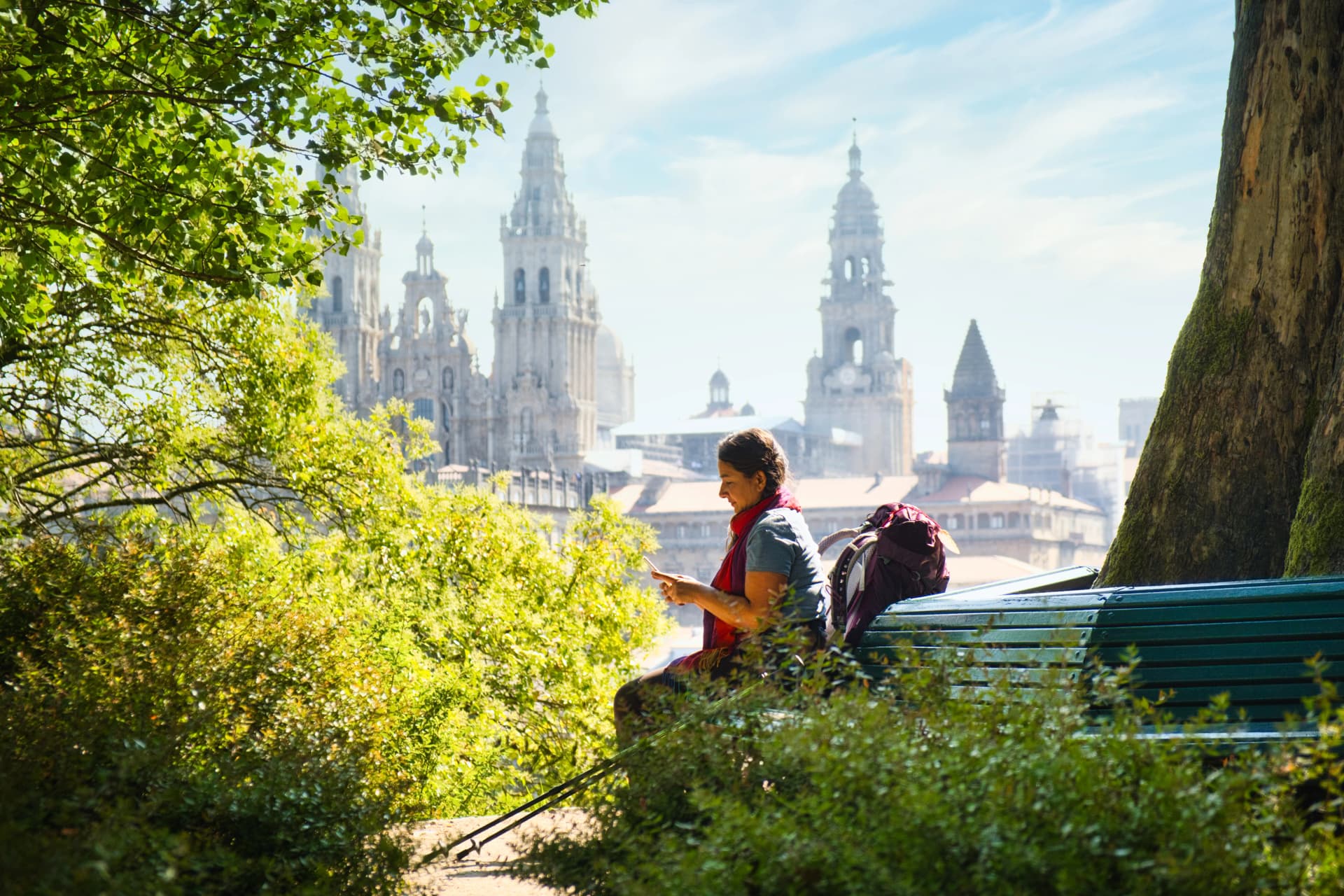
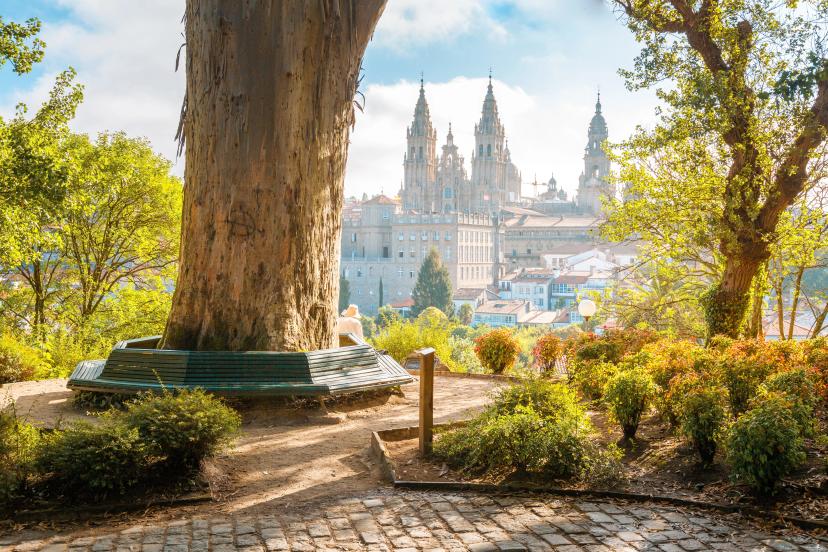
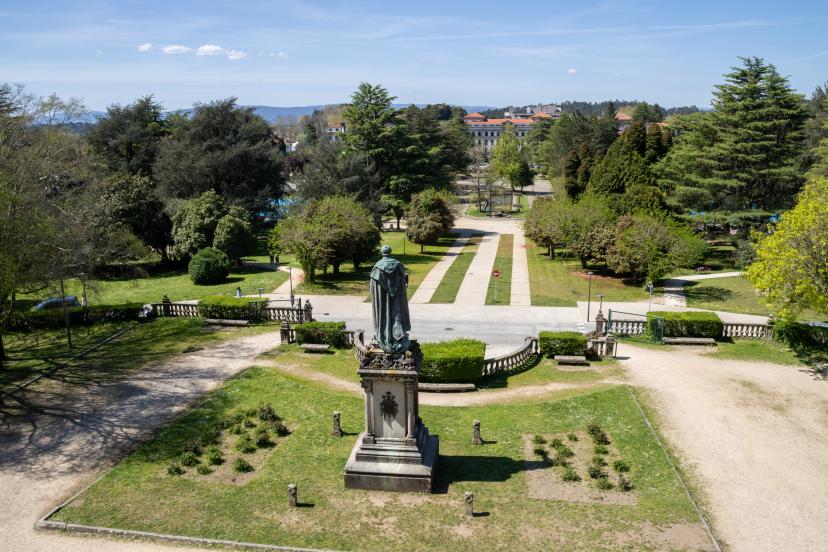
Parque da Alameda provides the finest cathedral views in Santiago, especially at sunset when western light illuminates the spires from across the park's elevated position. Walking paths wind through gardens, past fountains, and by the famous "Two Marys" stone statues commemorating local figures who defied 1950s social conventions. The park offers peaceful respite from the crowded Old Town and creates space for reflection after completing pilgrimage, with benches facing the cathedral allowing contemplation of the journey's end.

Museo das Peregrinacións
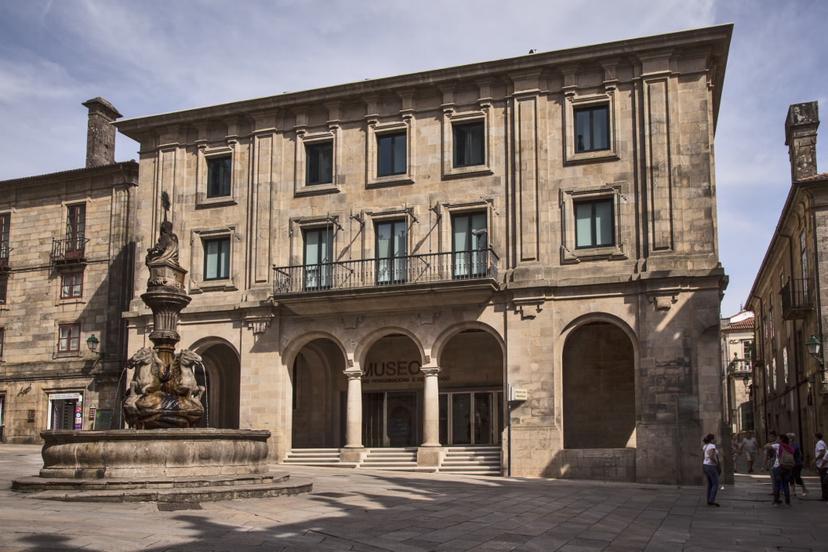
The Museum of Pilgrimage and Santiago occupies restored medieval buildings near the cathedral, with exhibits tracing route evolution, displaying medieval artifacts like scallop shells and staffs, and exploring pilgrimage across religions and cultures. The collection contextualizes the Camino within the broader human impulse toward sacred journey, helping visitors integrate their completed experience by showing how their walk connects to centuries of predecessors and ongoing tradition. Pilgrim credentials earn discounted admission, and English explanations accompany most displays.

Monte do Gozo
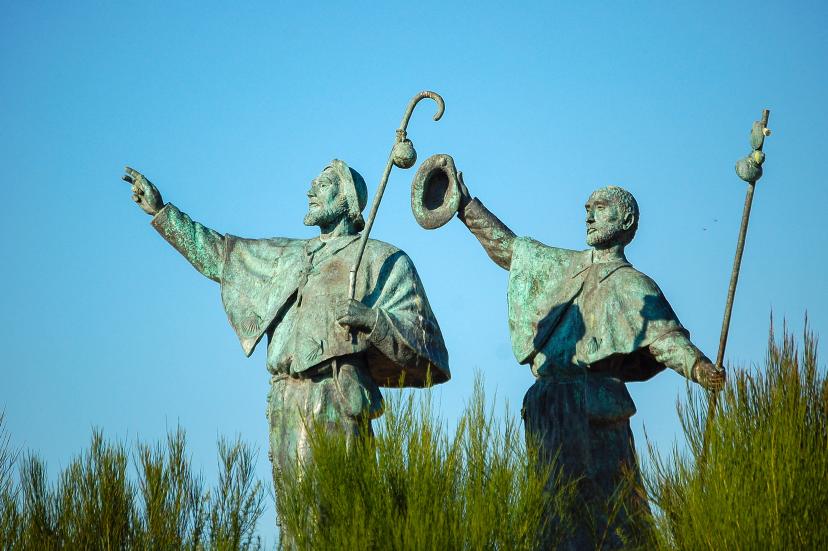
Hill of Joy, the traditional first viewpoint of Santiago Cathedral's towers located just 5 kilometers from journey's end, where medieval pilgrims first glimpsed their destination and wept with relief. Pope John Paul II held massive outdoor mass here during 1989 visit, leading to construction of modern monument and pilgrim facilities. The hilltop offers panoramic views across Santiago when weather permits. Modern pilgrims often pause here for photographs and reflection before descending into Santiago's suburbs, experiencing the same emotional moment that has moved travelers for over 1,000 years.
These sites can fill 2-3 days comfortably. Many pilgrims stay longer than planned, drawn into Santiago's rhythm of exploration and rest.
Food to Try
Galician cuisine reaches peak expression in Santiago, where centuries of pilgrimage wealth created sophisticated food culture. These three dishes represent essential Santiago eating.
Explore more dishes you will encounter on your way across multiple countries in our Camino food guide.

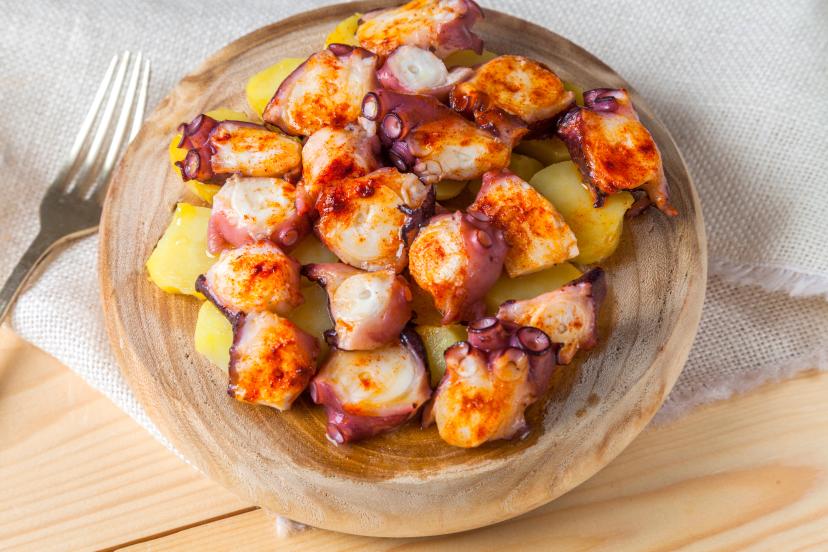
Pulpo a la Gallega
Pulpo a la Gallega (Galician octopus) represents Galicia's signature dish, particularly famous in the town of Melide where pilgrims encounter their first authentic pulpería (octopus restaurant). The preparation requires skill: octopus must be scared (dipped in boiling water three times) before cooking to tenderize properly, then boiled until tender, sliced into coin-sized pieces, and served on wooden plates drizzled with olive oil and dusted with sweet and hot paprika alongside boiled potatoes. Every pilgrim must try pulpo at least once.

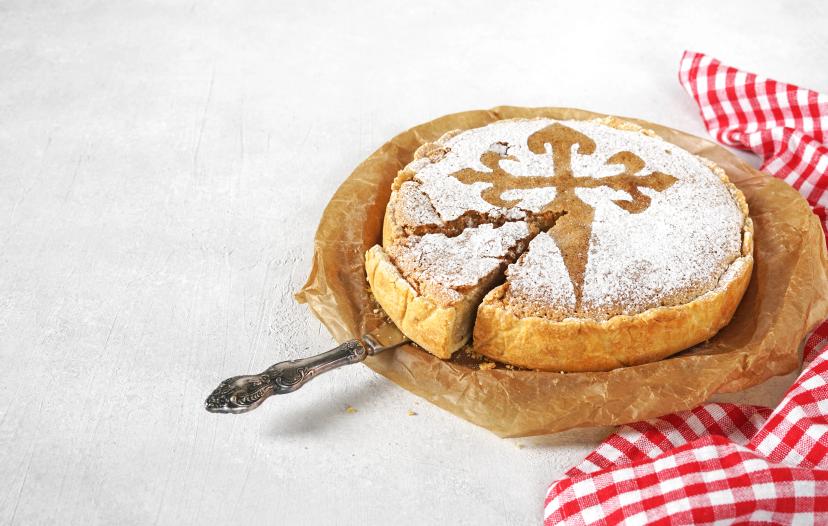
Tarta de Santiago
Tarta de Santiago is Galicia's iconic almond cake, instantly recognizable by the Cross of St. James stenciled in powdered sugar on its golden top. Made primarily from ground almonds, eggs, sugar, and lemon zest—with no flour—the cake achieves a dense, moist texture that's naturally gluten-free. The recipe dates to medieval times when Santiago's convents produced sweets for pilgrims and locals. Its simplicity belies its deliciousness, with the almonds providing rich flavor while lemon brightens the sweetness. You'll find Tarta de Santiago in every bakery and restaurant in Santiago de Compostela.

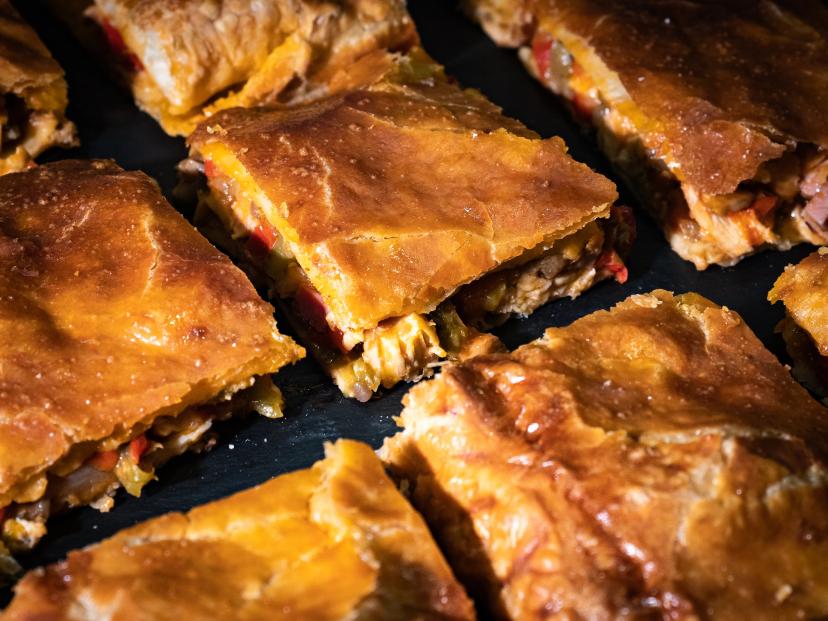
Empanada Gallega
Large savory pie with wheat or corn dough filled with various ingredients—traditional fillings include tuna with peppers, cod with raisins, pork loin, or scallops (vieiras, the Saint James symbol). The word derives from "empanar" (to coat in bread). Galician families prepare empanadas for festivals and Sunday meals. Hand-sized portions sold in bakeries and bars as convenient portable lunch—medieval pilgrims likely ate similar preparations while traveling. Fillings vary by season and whether the town is coastal or inland. Dough can be wheat or corn.
Pro tip: Budget €30-40 daily for meals including wine if eating like locals, €50-70 for nicer restaurants. Pilgrim menus (€10-15) remain available, but Santiago's food deserves splurging after weeks of basic fare.
Pilgrim Culture & Evening Life
Santiago pulses with unique energy found nowhere else—thousands of pilgrims at different journey stages mixing with 30,000 university students and locals going about daily life. The city creates natural gathering spaces where exhausted arrivals meet energized locals, producing celebratory atmosphere that peaks each evening.
Where Pilgrims Gather

Plaza Roja (Praza Roxa)
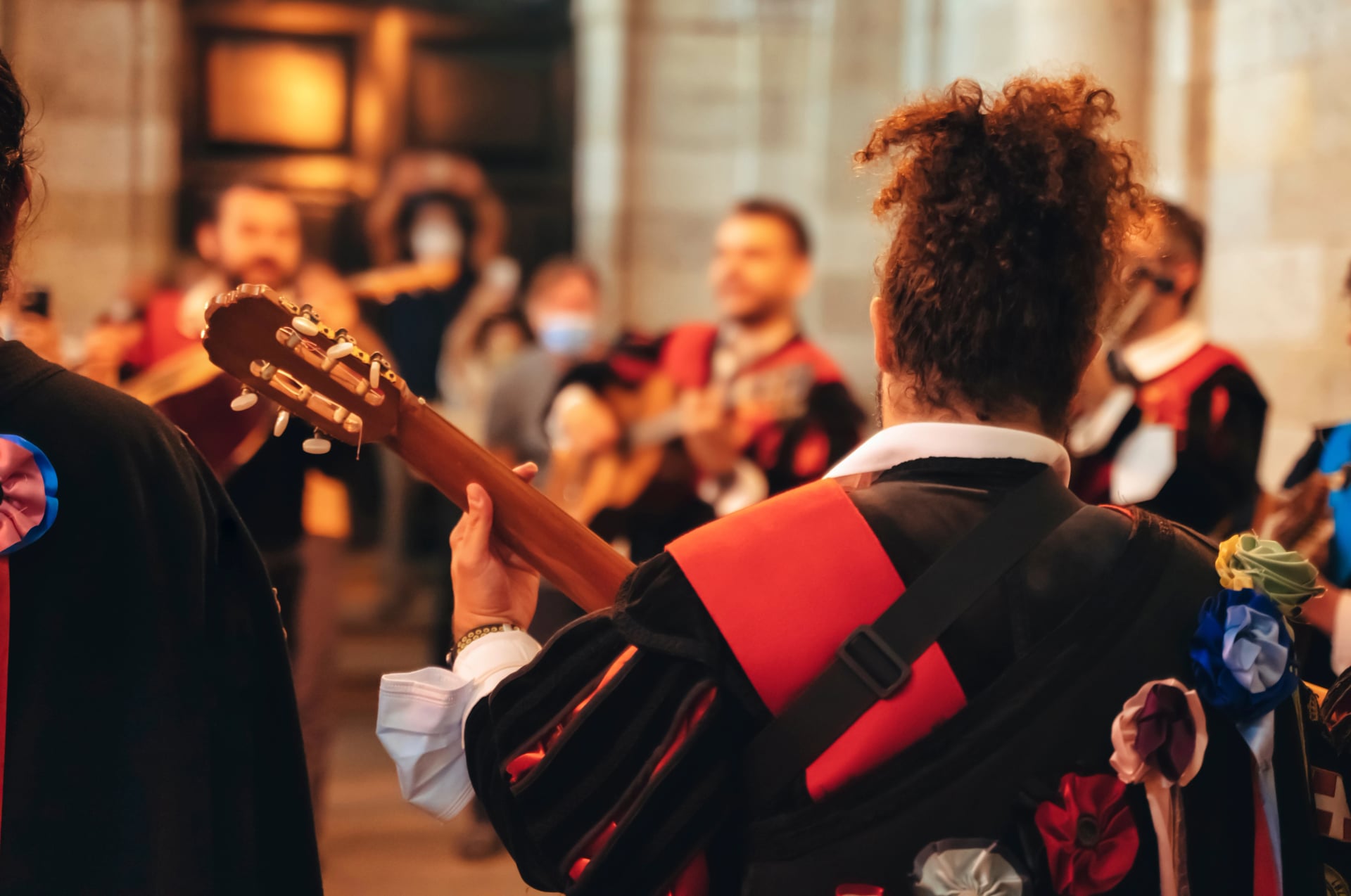
Plaza Roja sits behind the university library, functioning as an unofficial pilgrim meeting point that activates after 9pm each evening. The square attracts a younger crowd and offers cheaper drinks than the cathedral-adjacent streets, with guitar players and spontaneous singing creating an electric celebration atmosphere. The open space allows larger groups to form compared to the narrow bar-lined streets, and the university setting brings together pilgrims with local students.

Rúa do Franco
Rúa do Franco runs south from the cathedral, forming Santiago's main evening hub where pilgrims gather along a dense corridor of tapas bars and restaurants. The narrow street fills each evening as walkers spill onto cobblestones with wine, creating an atmosphere of impromptu reunions and trail story exchanges. Pilgrims frequently recognize faces from weeks earlier on the path, comparing notes on mutual acquaintances still walking and shared experiences from specific stages.
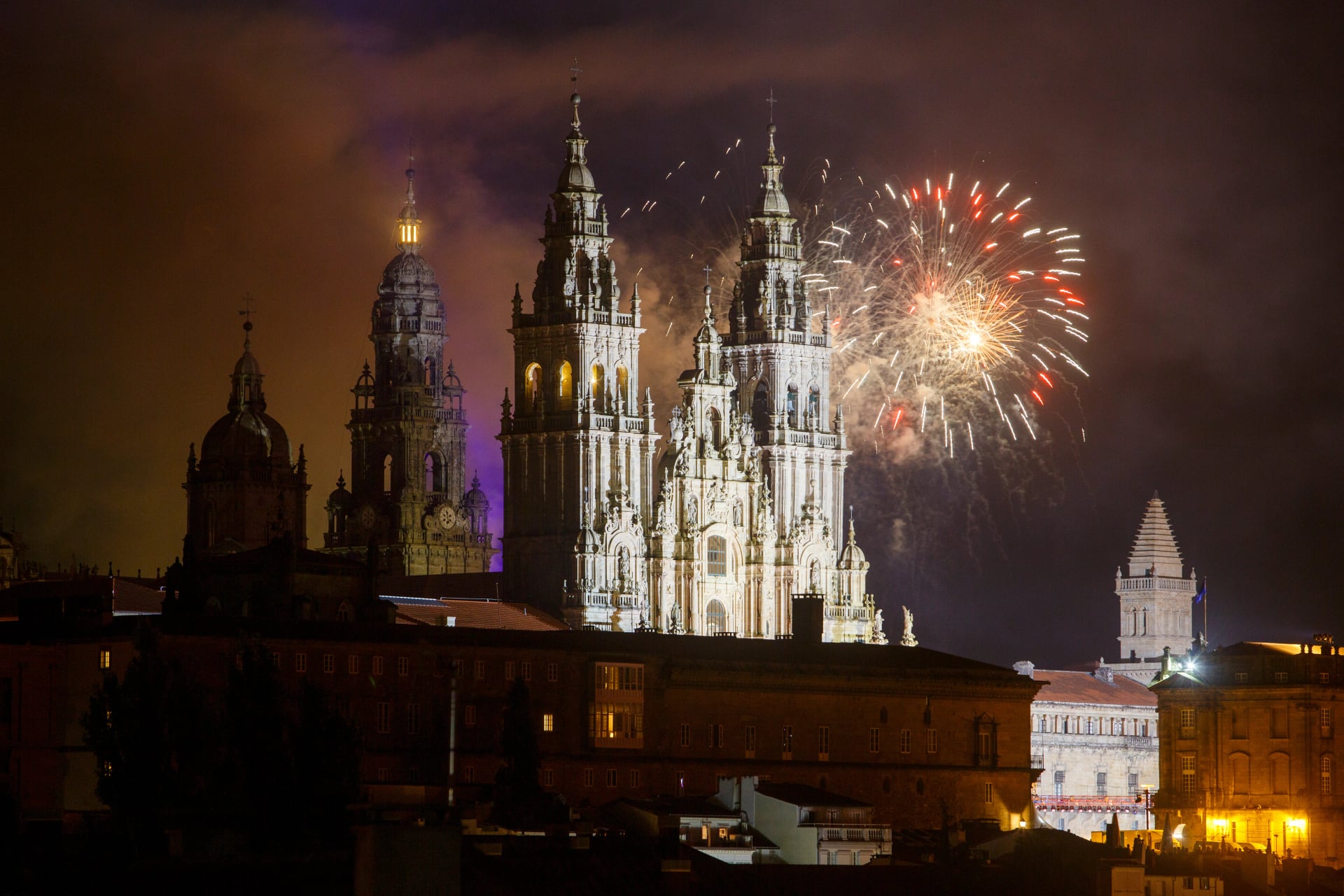
Cathedral steps at sunset: Before evening mass, pilgrims gather on Obradoiro steps watching light change on baroque facade, sharing final day emotions, arranging dinner plans
The evening paseo (traditional Spanish evening stroll) through Old Town reveals Santiago's character. Locals dress up and walk circuits greeting neighbors, families push strollers, couples hold hands—normal life flowing around pilgrim celebrations. The contrast between their daily routine and your extraordinary circumstance creates perspective many find grounding.
Most restaurants don't serve dinner until 8:30pm or later—embrace Spanish timing rather than eating at 6pm like on the trail. The extra evening hours allow processing the day's emotions, connecting with fellow pilgrims one final time, and gradually transitioning from trail community to solo traveler heading home. These unstructured evening hours often become as meaningful as the walking itself.
Making the Most of Santiago
How long to stay: Minimum 2 full days—one for Compostela and cathedral, one for exploration. We recommend 3-4 days for relaxed pace and full recovery. Many pilgrims arrive planning 2 nights and stay 5.
Accommodation requires booking even if you never reserved on the Camino—Santiago fills completely during summer. Options range from pilgrim albergues (€10-15) to budget hostels (€20-35), mid-range hotels (€60-100), and luxury paradores (€150+). Staying in Old Town eliminates walking. Book 1-2 weeks ahead during peak season.
Beyond Santiago, many extend to Finisterre (90km, 3-4 days) or Muxía (87km, 3-4 days). Day trips include Padrón, Cambados (wine country), and nearby beaches.
Santiago is Waiting!

The city rewards patience and openness—this is where the journey integrates. Give yourself time to absorb what you've accomplished rather than rushing immediately back to airports and schedules. Santiago isn't just the finish line; it's the space where walking ends and understanding begins.
For comprehensive planning including route selection, training programs, and stage-by-stage breakdowns, visit our ultimate Camino de Santiago guide. If you'd prefer organized support with accommodations, luggage transfers, and local expertise included, browse our complete tour offerings. Have specific questions about your Santiago arrival or Camino plans? Contact us anytime.

Explore Camino de Santiago cuisine by region—signature dishes, wines, and what to order in bars and pilgrim menus, from Galicia to the Meseta and beyond.
10 min read
Read moreThe Winter Way guide: quieter Ponferrada–Santiago route, stages, highlights, food, weather, and planning tips for a smooth, scenic pilgrimage.
17 min read
Read moreCold, quiet, rewarding winter Camino de Santiago planning with weather truth, safer route picks, packing essentials, and off season lodging tips.
10 min read
Read moreCamino pilgrim offices made simple—services offered, credential help, stamps, route guidance, and what to expect at starting points and key towns.
4 min read
Read moreUnderstand Camino credentials fast: where to buy a pilgrim passport, stamp requirements for the last 100 km, and how to get the Compostela certificate.
6 min read
Read moreA complete guide to walking the Camino as a senior: route selection, difficulty and terrain, daily pacing, and recovery tips for a smoother Santiago finish.
17 min read
Read moreChoosing comfortable, reliable footwear that supports long walking days on the Camino, improves stability, and helps prevent common foot problems.
10 min read
Read moreWalk the Camino alone with confidence: solo safety facts, route and lodging strategy, social dynamics, and smart tips for freedom, pace, and peace of mind.
9 min read
Read morePreparing your body and mind for long walking days on the Camino, with practical guidance on endurance, recovery and realistic expectations.
10 min read
Read more