Pilgrim Offices on the Camino
Camino pilgrim offices made simple—services offered, credential help, stamps, route guidance, and what to expect at starting points and key towns.

Anja
January 24, 2026
4 min read

Pilgrim offices serve as essential waypoints and support centers throughout your Camino journey—far more than just places to collect stamps or certificates. These official centers, run by cathedrals, pilgrim associations, or municipalities, function as information hubs, credential distribution points, and welcome centers where experienced staff help pilgrims navigate the practical realities of walking hundreds of kilometers.
Whether starting in the French Pyrenees, Portuguese coast, or anywhere in between, pilgrim offices provide the administrative foundation that makes modern Camino walking straightforward despite its medieval roots. They issue credentials granting access to pilgrim accommodations, verify journey completion, offer route advice, and connect you to the centuries-old pilgrimage tradition.
What Pilgrim Offices Do: Services & Support
Pilgrim offices exist at starting locations, mid-route cities, and the final Santiago office. Services vary by location, but all support pilgrims throughout their journey.
1. Primary Services
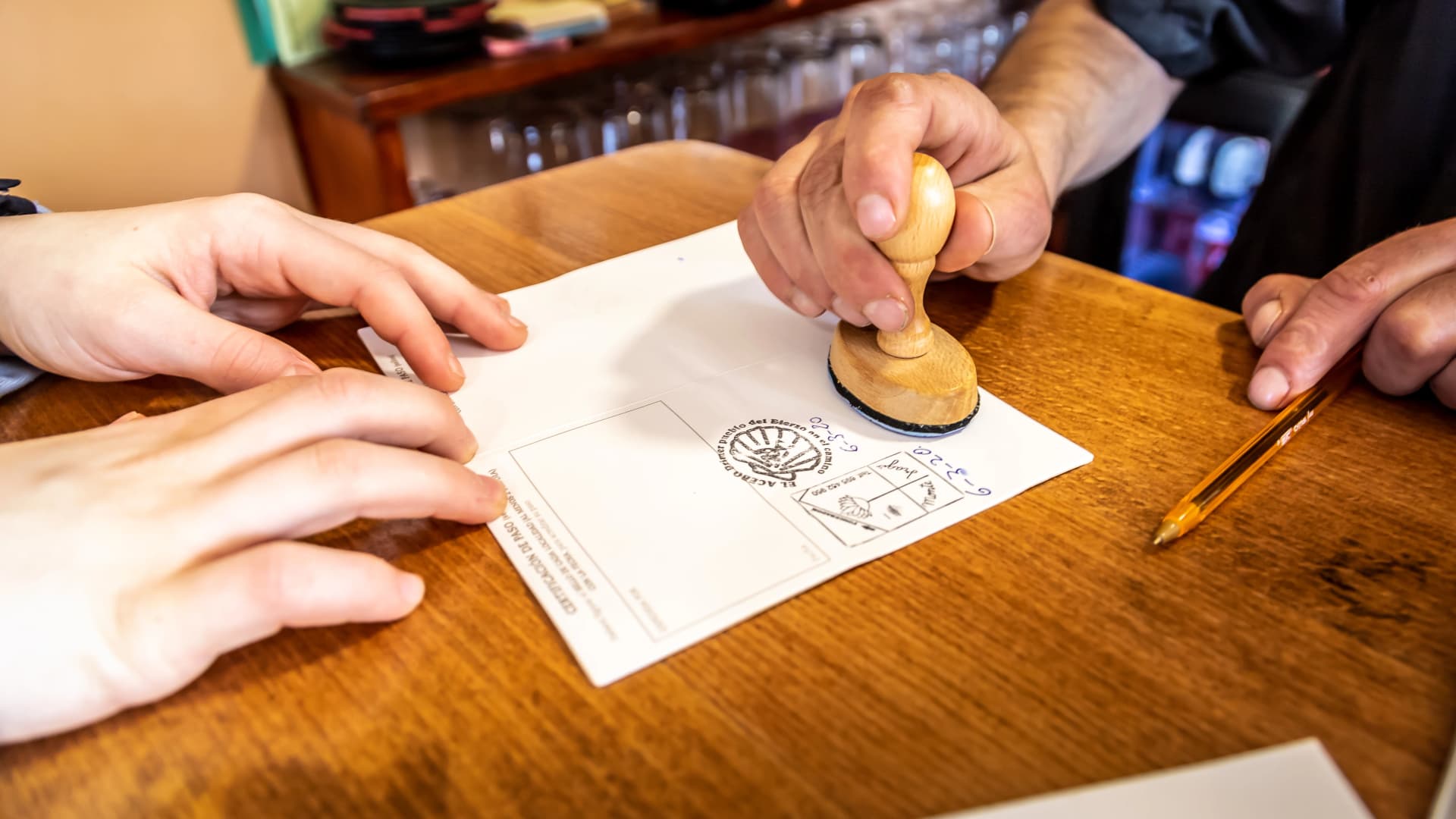
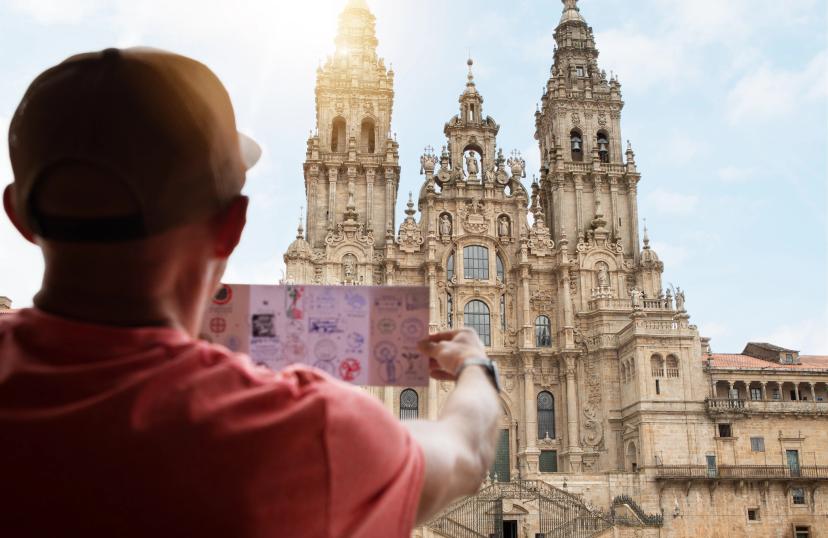
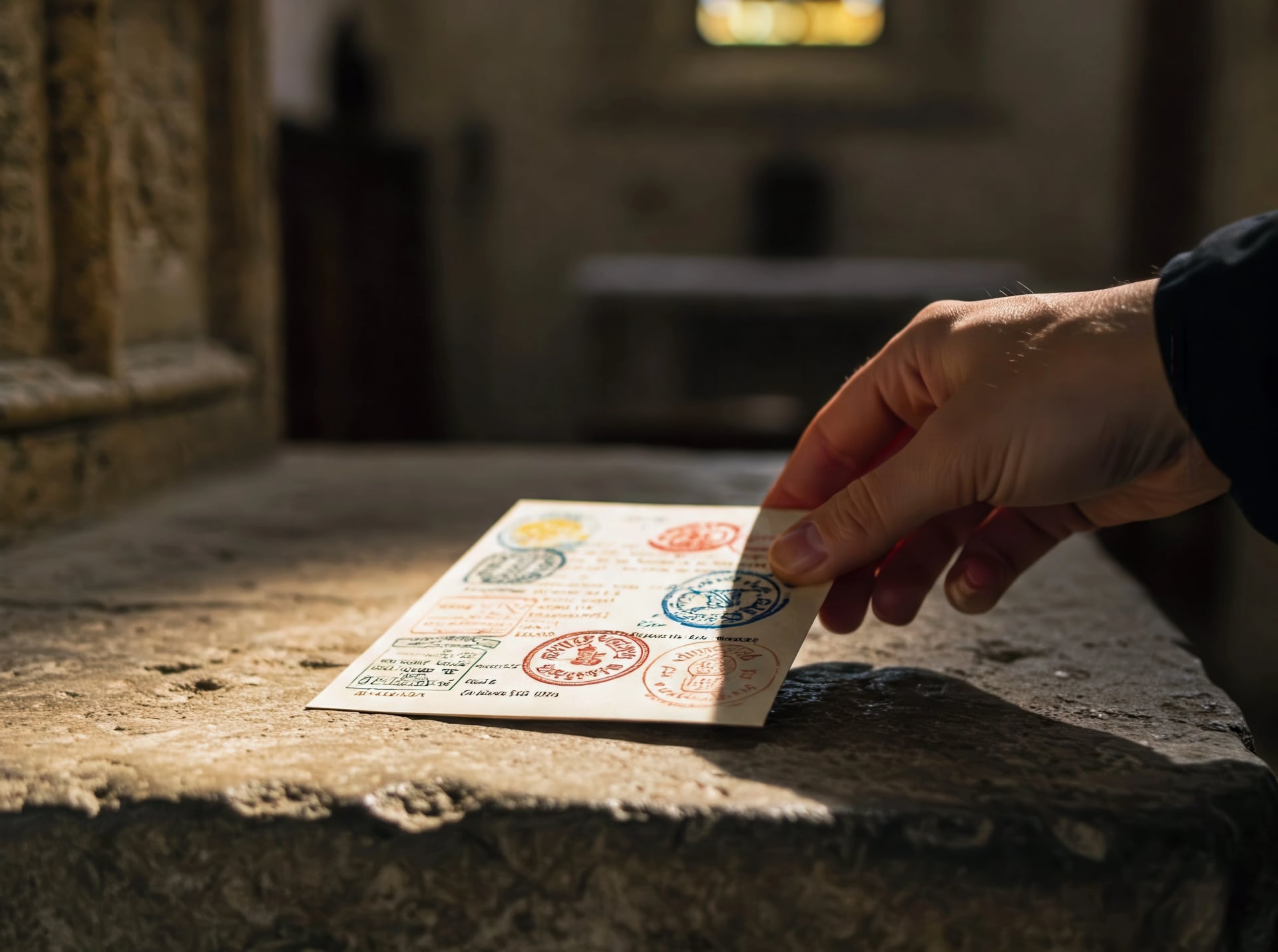
Starting offices issue pilgrim credentials for €2-5, the accordion-fold passports documenting your journey. Staff provide route information including stage distances and terrain conditions. Most offices maintain accommodation lists with contact details. All offices stamp credentials. Multilingual staff speak English, French, German, Italian, and Spanish. Many provide weather forecasts—crucial for mountain crossings.
2. Additional Support
Offices help arrange plan your next segment, maintain emergency contacts, provide you with the most recent weather updates and connect pilgrims with medical services when needed. Lost items often end up at offices, creating lost-and-found networks. Offices register pilgrim statistics.
Luggage transfers also exist on Camino de Santiago, and can be arranged with our team upon request. More information can be found on services like Pilbeo.
3. Santiago Compostela Process
The Santiago office verifies credentials, interviews pilgrims about motivation, and issues the Latin Compostela certificate. Additional certificates—Distance Certificates, secular Certificates, or extension certificates—are also available.
Main Pilgrim Offices Along the Routes
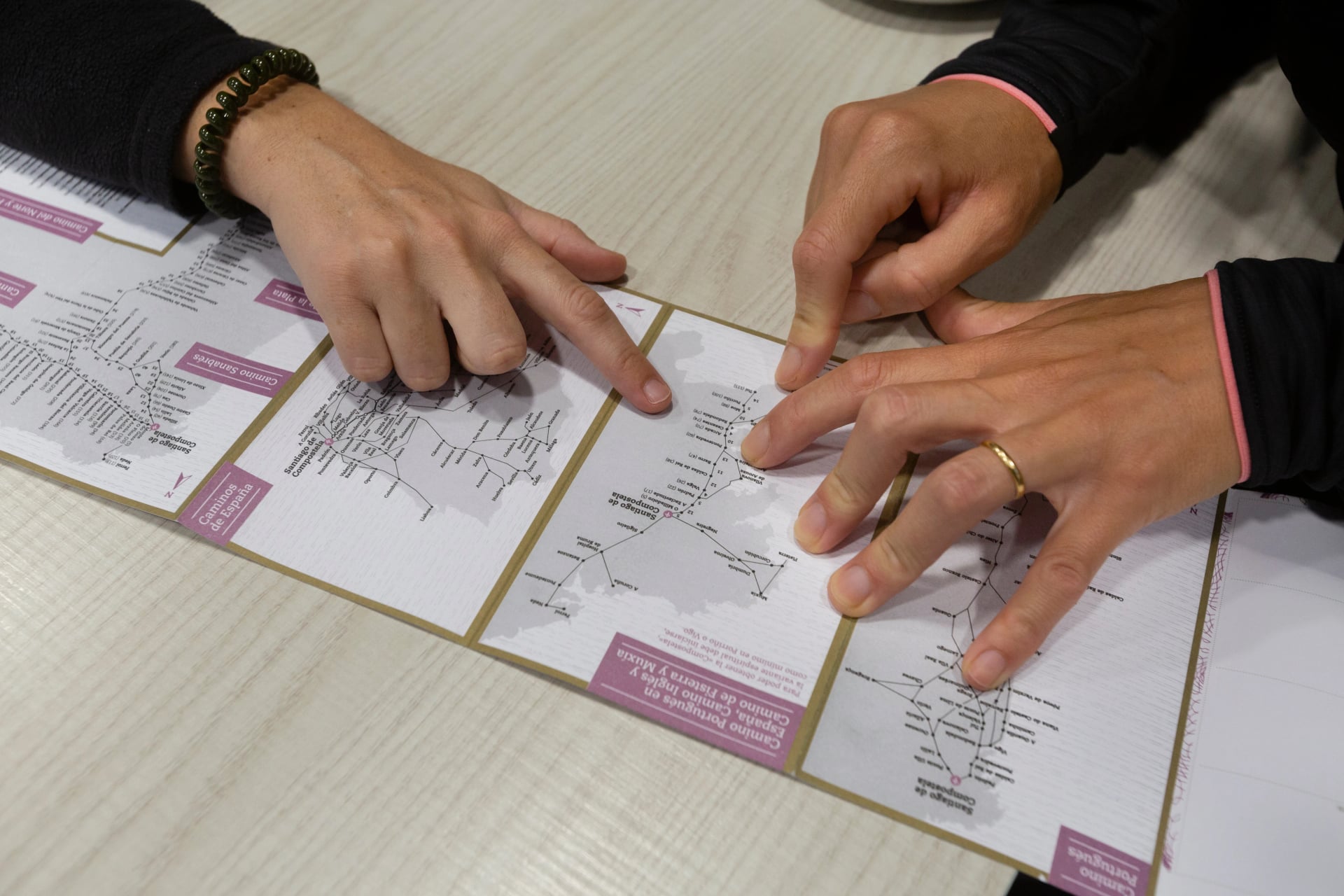
Pilgrim offices vary from comprehensive starting point centers to the final Santiago destination. Here are the most important offices positioned for convenient walking stages and maximum support.

Pilgrim Office - St-Jean-Pied-de-Port
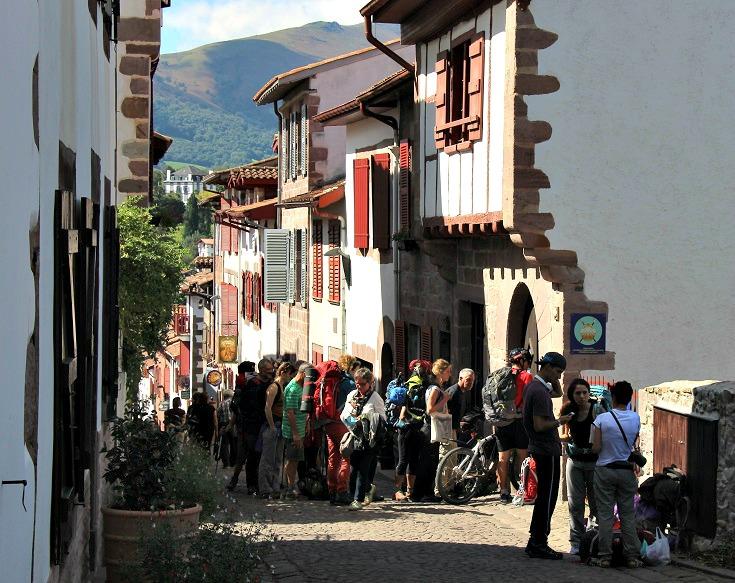
Located at 39 Rue de la Citadelle, this office marks the official Camino Francés starting point and operates daily year-round with seasonal hours (7:30am–8pm summer, 10am–5pm winter). Multilingual staff provide credentials, detailed route information, Pyrenees weather forecasts, and accommodation lists for the challenging first stages. Processing over 60,000 pilgrims annually, summer mornings see significant queues; afternoon arrivals avoid the rush. Staff offer advice about the demanding Napoleon Route and Valcarlos alternative based on fitness and weather conditions.

Cathedral of Pamplona
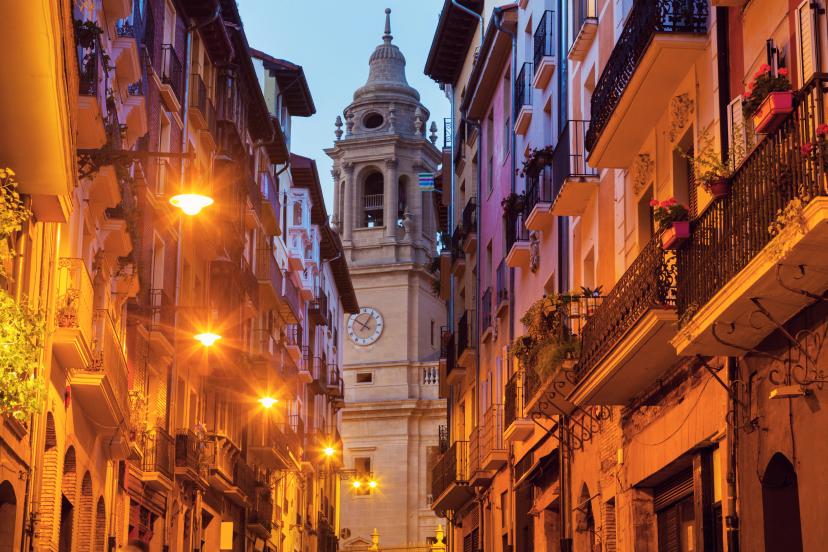
Available at the Cathedral of Pamplona on Calle Dormitalería and the municipal albergue, approximately 90 kilometers from St-Jean-Pied-de-Port. Credentials are available if starting mid-route or replacing lost documents, with weekday hours and reduced weekend availability. Pamplona marks the first major city after the Pyrenees crossing, making it ideal for credential replacement, route consultation, or obtaining additional Camino information. Staff provide accommodation lists for upcoming stages through Rioja wine country. The office sees moderate traffic compared to starting points.

Sé do Porto
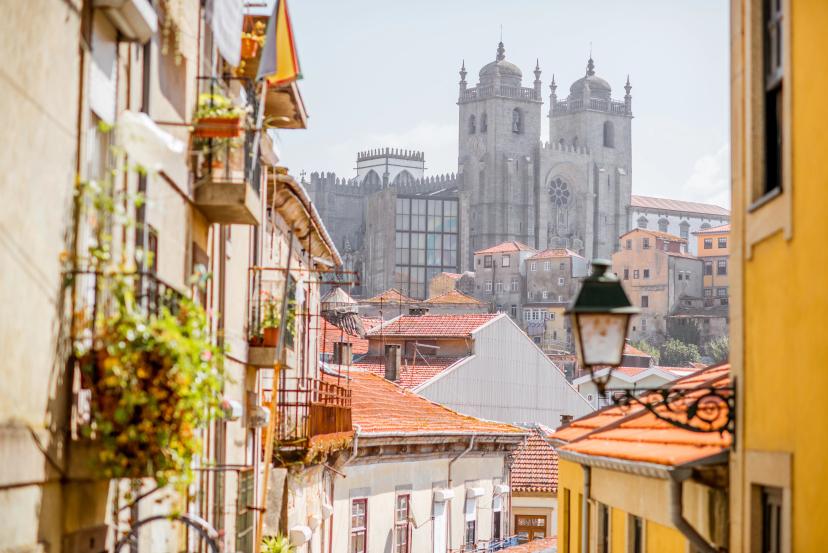
The official Camino Português starting point at Sé do Porto issues credentials near Terreiro da Sé, operating weekdays from 9am–12:30pm and 2:30pm–5:30pm. Alternative sources include Casa do Infante, the Albergue de Peregrinos, and various city churches. Both the Coastal and Central route variants use the same credential system, allowing flexibility in route choice during the walk north. The cathedral area experiences heavy tourist traffic; early morning visits provide quieter credential collection, and staff are well-accustomed to serving international pilgrims beginning their journey to Santiago.

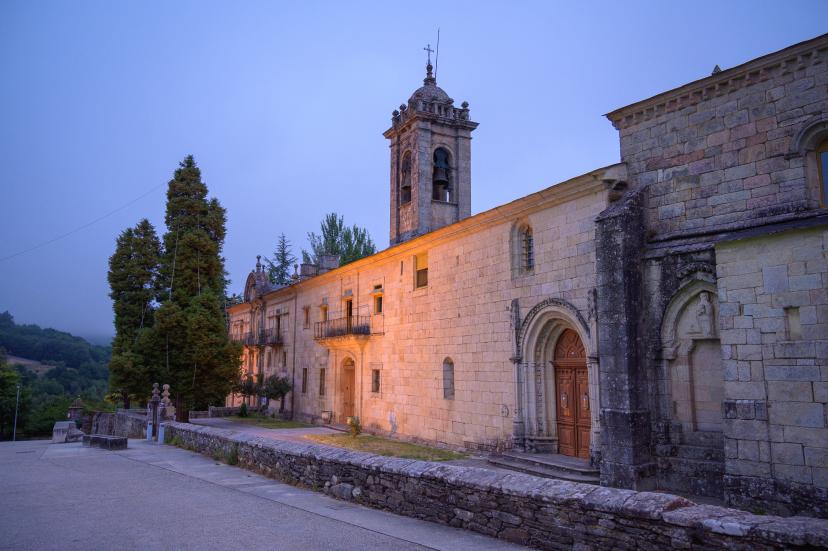
Iglesia de Santa Mariña - Sarria
The most popular "last 100km" starting point at Iglesia de Santa Mariña on Rúa Maior issues credentials daily with extended hours May–October (8am–9pm) and reduced hours November–April. Alternative sources include the municipal albergue and tourist office. The parish processes more credential requests than any location except St-Jean-Pied-de-Port, as the medieval town exists primarily to serve pilgrims walking the exact minimum Compostela-qualifying distance. This church marks the beginning of the Camino's busiest and most crowded section.

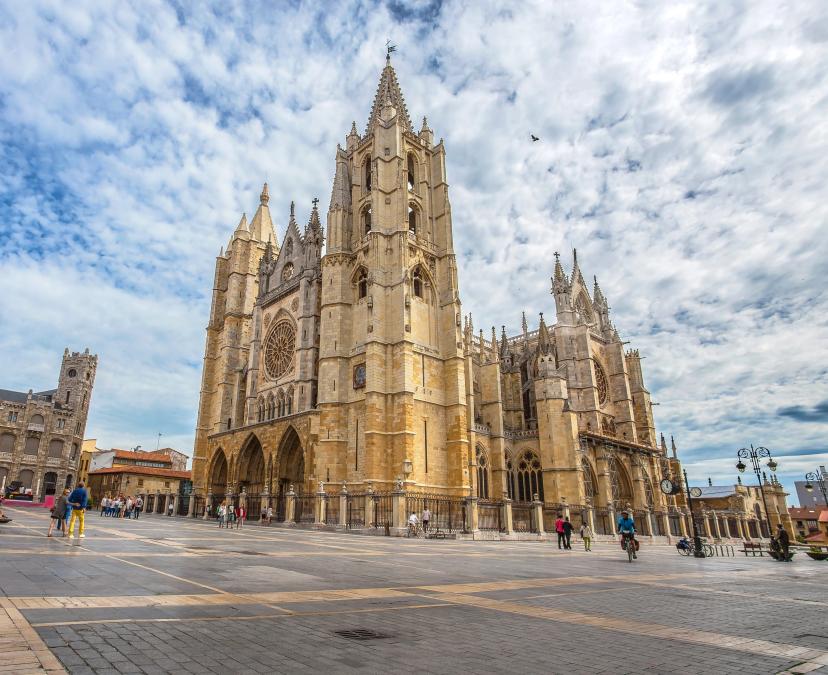
Cathedral of León
Located at the Cathedral of León in the city center, approximately 480 kilometers from St-Jean-Pied-de-Port. The office provides credentials, comprehensive information services, and serves as an informal community hub where pilgrims exchange experiences. Staff offer detailed advice for the challenging Meseta section ahead and the upcoming Montes de León mountain crossing. León's office helps pilgrims assess their progress, make accommodation plans for quieter stretches ahead, and connect with support services if equipment replacement or medical referrals are needed.

Oficina del Peregrino - Santiago de Compostela
The main pilgrim office at Rúa Carretas 33 issues Compostelas for all Camino routes ending in Santiago, operating daily with extended hours during peak season (9am–9pm April–October, 10am–7pm November–March). The process involves taking a numbered queue ticket, waiting for the digital board to display your number, presenting your stamped credential to staff, answering brief questions about your pilgrimage motivation and route, and receiving your personalized Latin certificate. Wait times average 30 minutes on weekdays but can extend to 2–3 hours during peak summer periods.

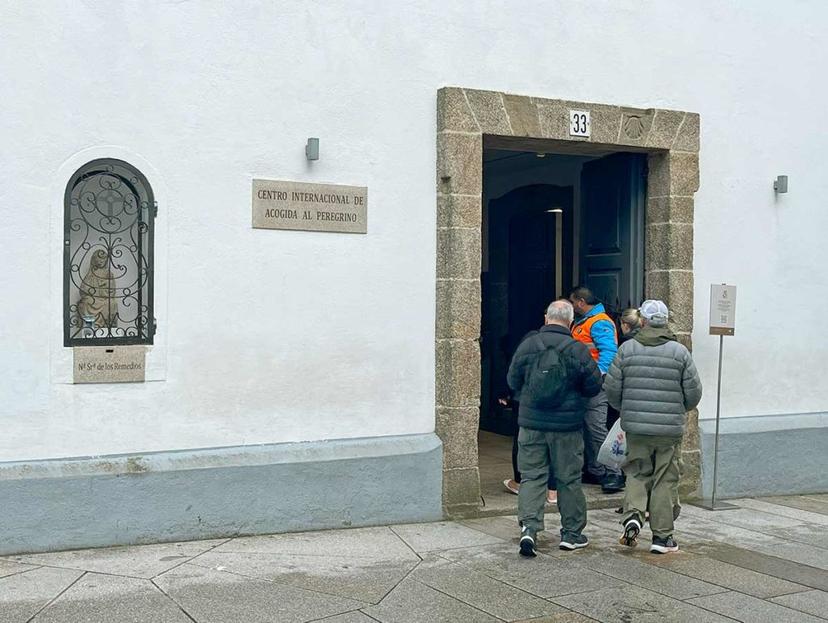
Oficina de Acogida al Peregrino - Finisterre
The small port office in Finisterre issues the Fisterrana certificate for pilgrims completing the 90-kilometer extension from Santiago, operating with summer hours of 10am–2pm and 4pm–8pm, reduced during winter months. The certificate requires no religious motivation, though many pilgrims skip formal documentation. The office maintains a relaxed atmosphere compared to Santiago's high-volume efficiency, with staff offering local information about beaches, coastal trails, and bus schedules back to Santiago for return journeys to catch flights or trains.

Opera Romana Pellegrinaggi - Rome
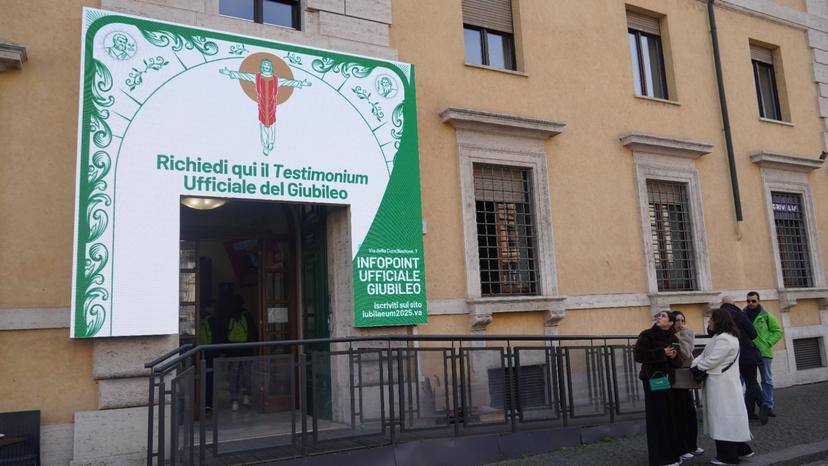
Located near St. Peter's Basilica, the Opera Romana Pellegrinaggi issues the Testimonium certificate for pilgrims completing the Via Francigena, the ancient pilgrimage route that traditionally extends from Canterbury, England to Rome, covering approximately 2,000 kilometers through France, Switzerland, and Italy. Unlike the Camino system, the Via Francigena follows distinct pilgrimage traditions dating to a 10th-century English archbishop's documentation of this historic route to the Vatican. Staff provide completion certificates and can offer guidance on credential requirements.
These offices provide the main support network positioned for convenient walking stages.
When to Visit Pilgrim Offices
Strategic timing makes the difference between smooth visits and frustrating waits. Here are the main advices based on our years of experience with Camino de Santiago routes:
Starting Offices: Visit the day before departure or morning of Day 1. St-Jean-Pied-de-Port sees massive queues 7:30-9am—arriving late afternoon the day before avoids this entirely.
Mid-Route Offices: Visit during rest days rather than walking days. León, Pamplona, and other city offices work best when you're spending the night. Use mid-route offices for credential replacement, route modifications, or connecting with staff and fellow pilgrims.
Santiago Office: Visit the day after arrival, not the same day. Weekdays move faster than weekends. Late afternoon (5-7pm summer, 4-6pm winter) sees shortest waits. The office uses QR code queue management—register online, monitor progress via app, return when your number approaches.
Peak Times to Avoid: Early mornings (9-11am), immediately after train arrivals, summer weekends in Santiago (2-3 hour waits common).
Bring passport or ID for credential issuance or Compostela collection. Carry cash as most offices prefer cash for credentials (€2-5).
More Than Just Paperwork
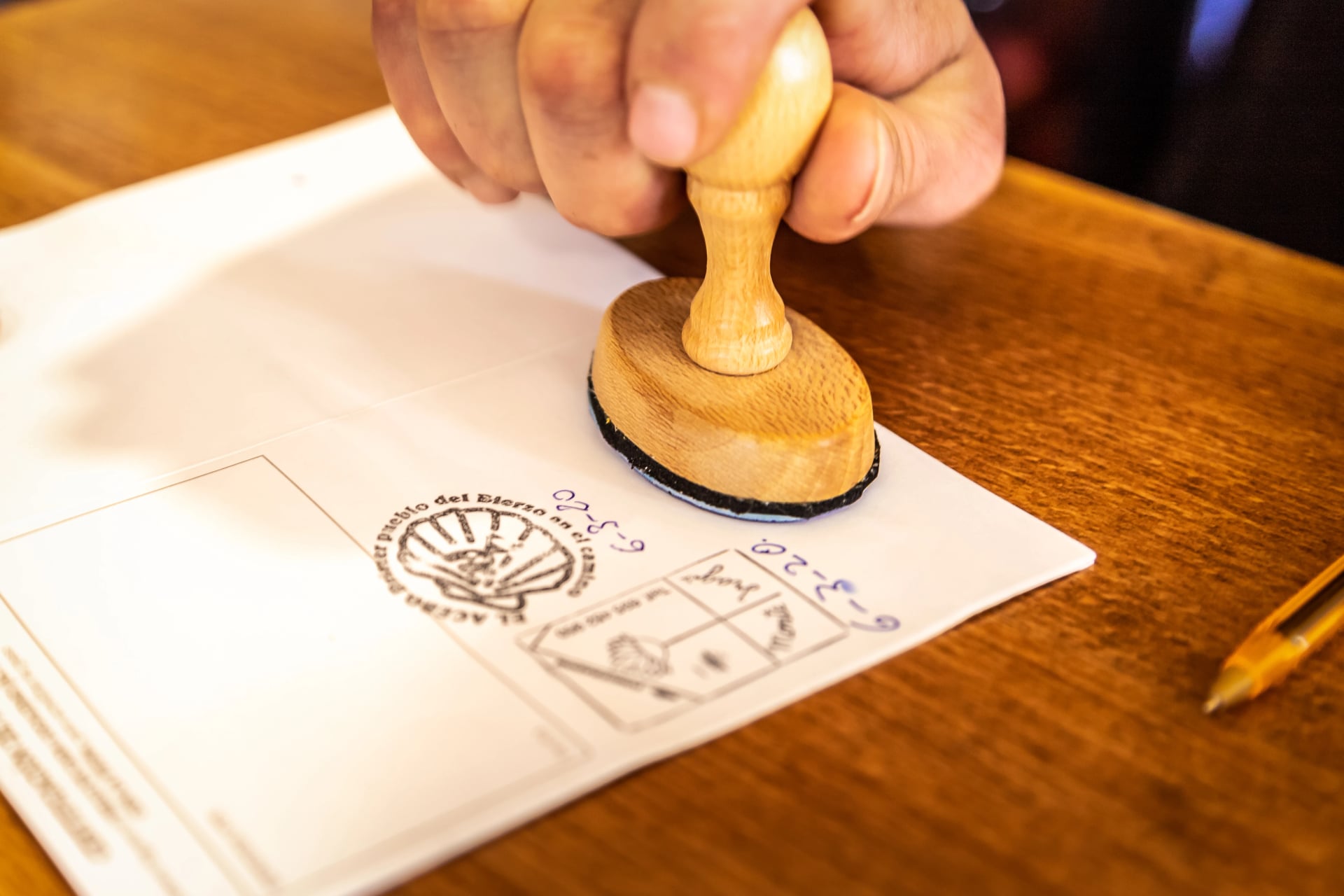
Pilgrim offices preserve centuries-old traditions while providing modern services that make walking to Santiago accessible to pilgrims worldwide. The staff—many former pilgrims themselves—understand the challenges and joys of the journey from lived experience.
For comprehensive Camino planning beyond pilgrim offices, visit our ultimate Camino de Santiago guide. Browse our complete tour offerings to chose your next Camino.
Have any more questions? We are here if you need to inquire about anything else you may need for your upcoming pilgrimage! Contact us.

Explore Camino de Santiago cuisine by region—signature dishes, wines, and what to order in bars and pilgrim menus, from Galicia to the Meseta and beyond.
10 min read
Read moreThe Winter Way guide: quieter Ponferrada–Santiago route, stages, highlights, food, weather, and planning tips for a smooth, scenic pilgrimage.
17 min read
Read moreThings to do in Santiago de Compostela after the Camino—main sights, food spots, cultural experiences, and how to plan 2–3 days post-finish.
5 min read
Read moreCold, quiet, rewarding winter Camino de Santiago planning with weather truth, safer route picks, packing essentials, and off season lodging tips.
10 min read
Read moreUnderstand Camino credentials fast: where to buy a pilgrim passport, stamp requirements for the last 100 km, and how to get the Compostela certificate.
6 min read
Read moreA complete guide to walking the Camino as a senior: route selection, difficulty and terrain, daily pacing, and recovery tips for a smoother Santiago finish.
17 min read
Read moreChoosing comfortable, reliable footwear that supports long walking days on the Camino, improves stability, and helps prevent common foot problems.
10 min read
Read moreWalk the Camino alone with confidence: solo safety facts, route and lodging strategy, social dynamics, and smart tips for freedom, pace, and peace of mind.
9 min read
Read morePreparing your body and mind for long walking days on the Camino, with practical guidance on endurance, recovery and realistic expectations.
10 min read
Read more